Backyard Pollinator Habitat Planning
Bloom calendars, host plant guides, and pesticide-free yard strategies for gardeners across Canada who want to support native bees, butterflies, and other pollinators.

Topics on Native Plant Gardening
Detailed guides on bloom timing, plant selection, and habitat design for Canadian backyards.

Native Plant Bloom Calendar for Canadian Gardens
Month-by-month flowering guide covering early spring through late fall for Ontario and adjacent provinces.

Host Plants for Bees and Butterflies in Ontario
Specific native species that provide food and breeding habitat for common Ontario pollinators.

Creating Pesticide-Free Yard Zones for Backyard Habitat
Practical methods for reducing or eliminating pesticide use while maintaining a functional, attractive backyard.
Pollinators in the Canadian Landscape
Wild bees, butterflies, and other insects depend on specific native plants that have co-evolved with them over thousands of years.
Native Plants Over Cultivars
Straight-species natives provide pollen and nectar that cultivated varieties often lack due to altered flower structures or reduced scent compounds.
Specialist Bees
Many Canadian bee species are pollen specialists — they collect only from specific plant genera. Without those plants, the bee cannot complete its lifecycle.
Butterfly Host Plants
Monarch caterpillars require milkweed. Black swallowtails need Queen Anne's lace or wild parsnip. Matching butterflies to their host plants is essential for breeding habitat.
Seasonal Continuity
A productive pollinator garden provides blooms from April through October. Planning for multiple successive bloom periods prevents gaps in nectar availability.
Regional Plant Selection
Plants native to Ontario or the Great Lakes region are best adapted to local soils, rainfall patterns, and temperature extremes — reducing maintenance requirements.
Nesting Habitat
Ground-nesting bees need undisturbed bare or sparsely vegetated soil. Stem-nesting species use hollow or pithy plant stems left standing through winter.
Purple Coneflower and Wild Bergamot
Two of the most productive native plants for Ontario pollinators. Purple coneflower (Echinacea purpurea) blooms from July into September and attracts a broad range of native bees, including several specialist Pseudopanurgus species.
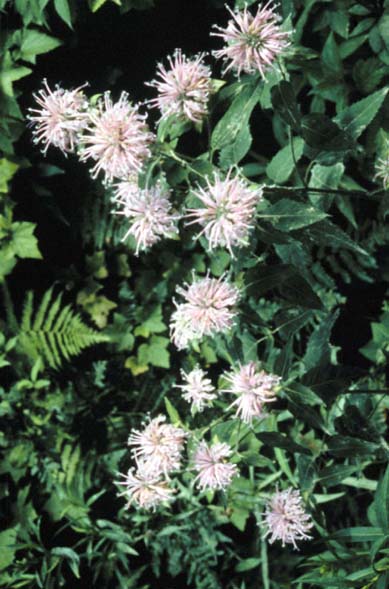
Wild bergamot (Monarda fistulosa) offers tubular flowers well-suited to long-tongued bees and several bumblebee species. Both plants tolerate clay-heavy soils common in southern Ontario.
Together, these two species can form the backbone of a mid-summer pollinator planting, supported by earlier bloomers such as wild geranium and native violets.
Canada Goldenrod and Cardinal Flower
Canada goldenrod (Solidago canadensis) is one of the most ecologically important late-season plants in eastern Canada. It blooms from August into October, providing a critical nectar source during the period when monarch butterflies are preparing for migration.
Cardinal flower (Lobelia cardinalis) is the primary Canadian host for ruby-throated hummingbirds but also attracts long-tongued bumblebees. It thrives in moist conditions near water features or low-lying areas.
